What a typical day
at PACS looks like
PACS runs every day of the year on a skeleton team, with no government funding and no guaranteed income. This is what that actually means in practice.
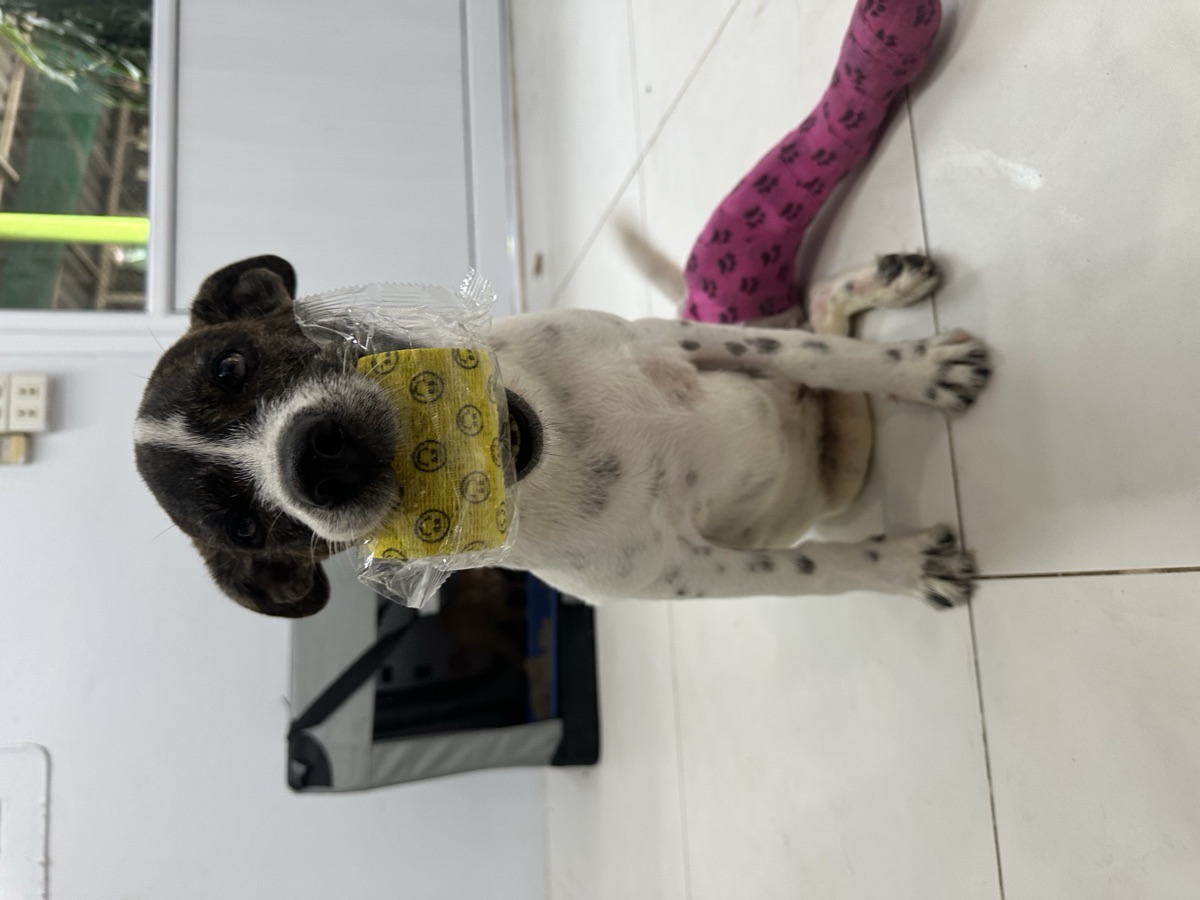
The most common reasons
animals need PACS
No two days are the same, but these are the conditions the team treats week in, week out, year after year.
Wounds
Infected and maggot-infested wounds. The most common admission, around 40% of in-patients.
Road traffic accidents
Broken bones, spinal injuries and trauma. Up to 10 cases in a busy month.
Skin conditions
Demodectic mange and parasitic infections, often requiring months of ongoing treatment.
Tick fever (Ehrlichia)
Endemic on the island; increasingly resistant to standard treatment.
Poisoning
Strychnine cases require immediate emergency response and are often fatal.
Viral infections
Distemper, Parvo and Adenovirus, treated in strict isolation to prevent spread.
Eye problems
Injuries, ulcers and glaucoma. Around 5% of admissions, some requiring surgical removal.
TVT
Transmissible venereal tumours, spread between dogs through mating and contact. Treated with a course of chemotherapy; most cases respond well.
Small team. One hospital
Dr Yang joined PACS in September 2025, and we could not be more grateful to have him. He leads all clinical work: performing surgeries, managing every in-patient, responding to emergencies, and making treatment decisions.
He is supported by a nurse, a receptionist, a director, and a volunteer coordinator. Together they keep the clinic running through everything else: continuous phone calls, new animals arriving, and a ward that needs feeding, cleaning and medicating regardless of what else is happening. On most days there is no pause. The work simply doesn't stop.
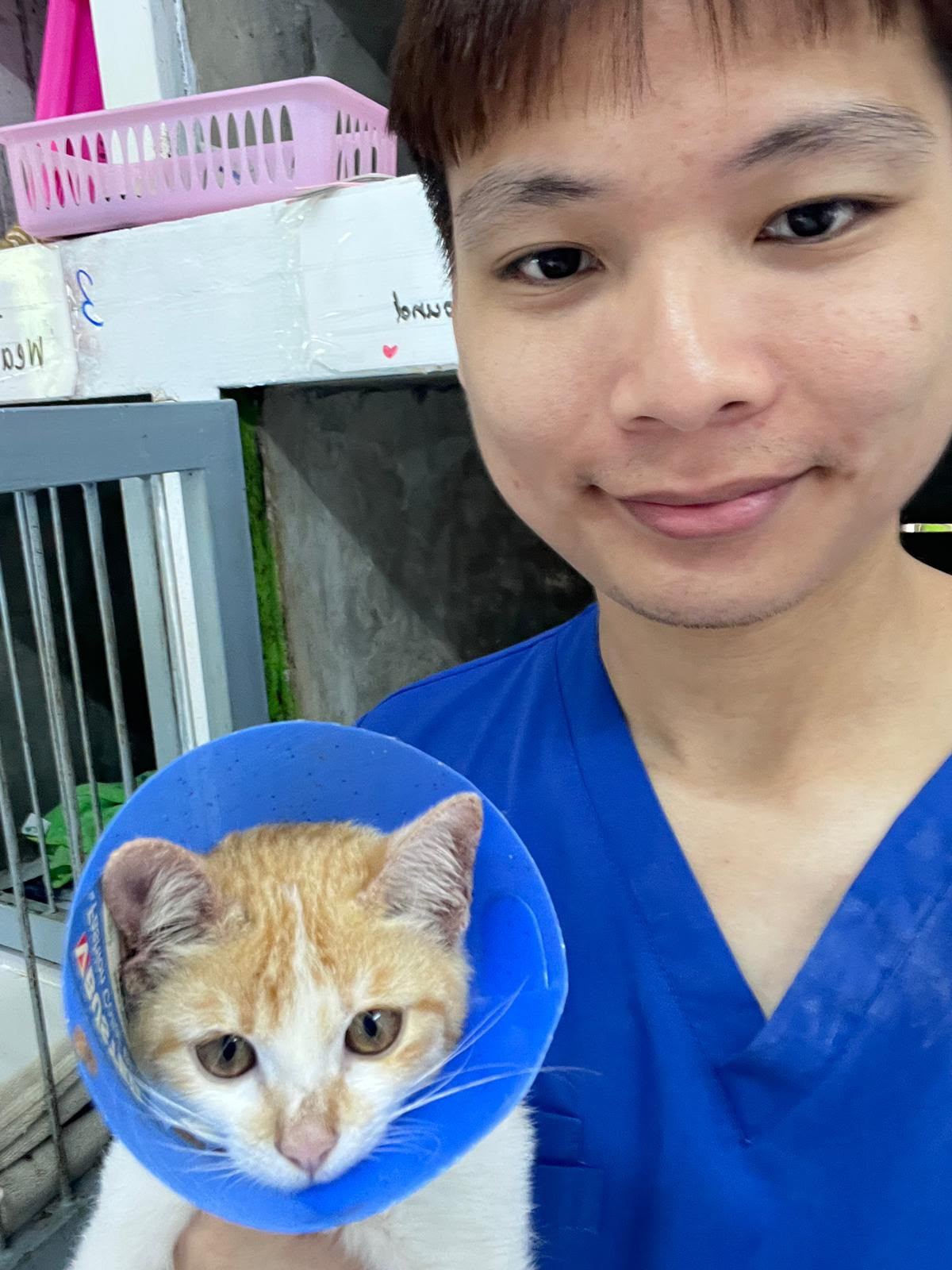
Dr Yang with one of his patients on the road to recovery
No government funding. No guaranteed income. Just the animals.
Every medicine, every bandage, every vaccine, every bag of IV fluids is paid for by donations. PACS has no income stream and no financial safety net. Running costs consistently work out at more than ฿8,000 a day. Every day of the year.
฿8,000
a day, every day
funded entirely by donations
A small team with their work cut out
The permanent team at PACS is tiny for what it's being asked to do. To run properly, the clinic needs significantly more hands. Regular monthly sponsorship is the only way that becomes possible.
Roles that need funding
Eight more salaries. That is the difference between a clinic that copes and a clinic that can actually keep up with the needs of Koh Phangan's animals.
A regular donation gives us the stability to plan
However small, a monthly donation lets PACS buy medicines, pay salaries, and say yes to more animals in need. Every baht goes directly to the clinic.